
HAPS technology is moving beyond concept and into real-world operation, with applications spanning defense, communications, aviation, weather sensing and environmental monitoring. Across the industry, technical advances, operational flights and emerging frameworks are helping turn that potential into practical applications.
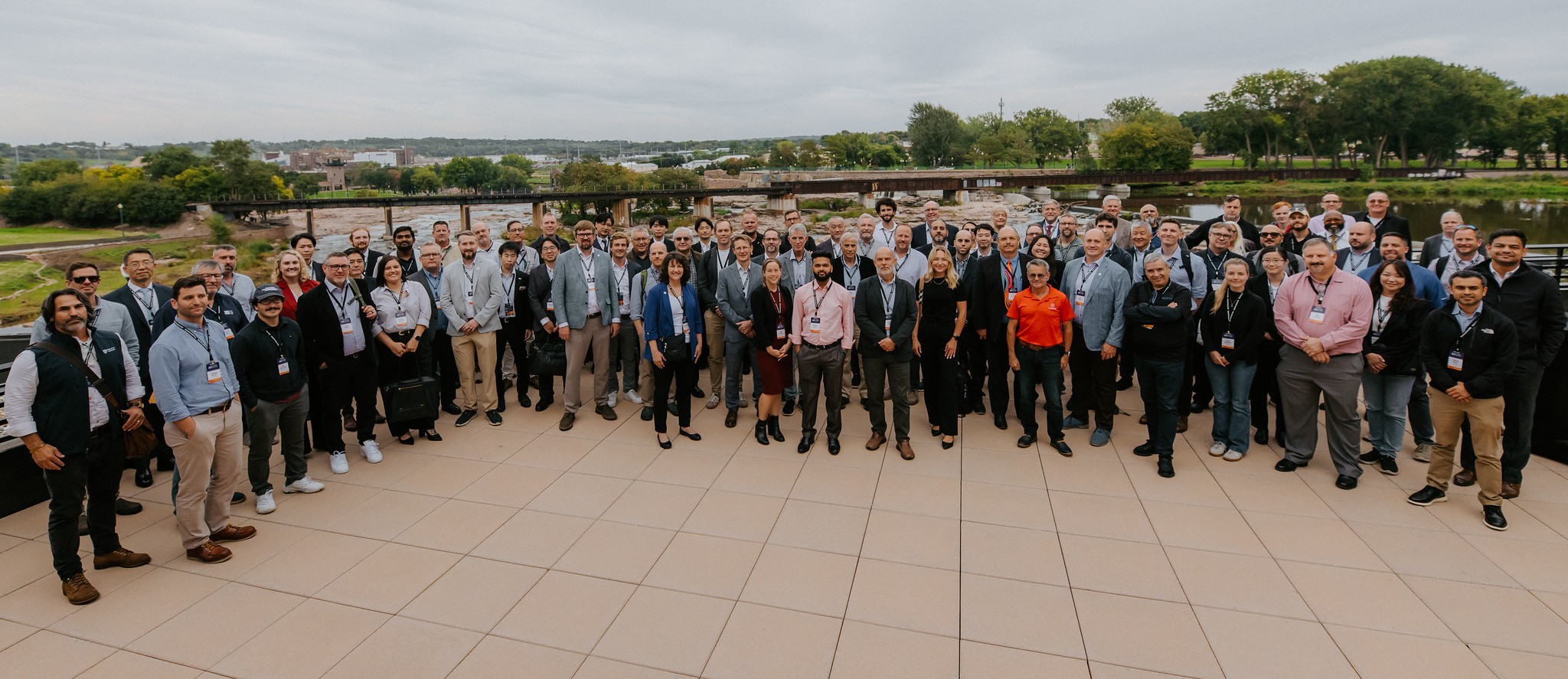
“HAPS at Work: Powering Progress in Open Skies” was hosted by Aerostar in Sioux Falls, South Dakota, 29 September through 1 October. The HAPS Alliance meeting brought together 96 attendees representing 54 organizations across seven countries — a new record for the Alliance’s events. This milestone reflects both the continued growth of the HAPS Alliance, with more than 10 major organizations joining in the past year alone, and the broader momentum of the HAPS industry as interest, investment, and participation continue to expand.
For attendees in defense, aviation, telecommunications and aerospace, the meeting offered a firsthand look at how HAPS capabilities are being developed, tested and put to work – and the work underway to bring even more applications into operation. Here are some of the key developments highlighted at the event.
1. Aerostar Thunderhead Launch: HAPS at Work in the Field
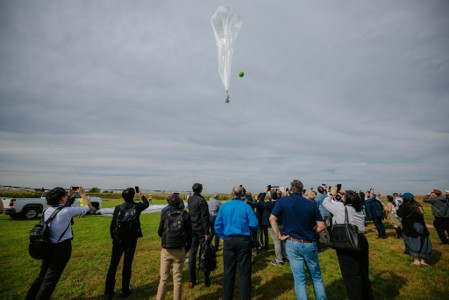
One of the clearest examples of HAPS technology at work came from outside the conference room. Attendees witnessed Aerostar launch their Thunderhead balloon system into an operational cycle to collect weather data, bringing the promise of HAPS into clear view.
It was a fitting example of the meeting’s broader message: HAPS is not a technology of tomorrow. It is operating today, delivering real-world capabilities while the industry works to scale deployments, advance regulatory frameworks, and unlock new applications.
2. Defense Applications Move to the Forefront
Defense was a central theme throughout the Member Meeting, reflecting growing interest in how HAPS can provide persistent, flexible capabilities from the stratosphere. Lieutenant General (Ret.) Dan Karbler focused his keynote on defense, while Aerostar’s host briefing highlighted defense applications alongside the company’s operational work.
The UK Ministry of Defence provided a detailed look at Project AETHER, an effort to demonstrate how high-altitude balloons can support persistent intelligence, surveillance and reconnaissance (ISR), communications resilience and operations at higher latitudes. The presentation also highlighted recent flight trials and future work involving optical communications, networked payloads and additional sensing capabilities.
A dedicated HAPS in Defense panel brought together U.S. and UK defense perspectives to examine where HAPS could contribute to layered defense, persistent sensing, communications relay, contested electronic-warfare support, modeling and simulation, payload standardization and airspace deconfliction. Together, these discussions showed that defense is not a secondary use case for HAPS, but a significant area of active testing, investment and collaboration.
3. Weather Sensing and Persistent Wildfire Monitoring
Beyond defense, HAPS is also being used for weather sensing and environmental monitoring. Wildfire monitoring illustrated both the potential of persistent high-altitude observation and the importance of identifying where HAPS can add distinct value.
Rather than duplicate satellite-based detection, a high-altitude platform can provide targeted, sustained observation after a fire is detected, helping responders track what is burning, where conditions are changing and how an incident is developing.
Realizing that potential will depend on mission requirements, sensor performance, available energy and conditions such as smoke obscuration. Those are precisely the operational questions the industry needs to resolve as HAPS are deployed.
4. Connecting Space, Air and Ground: The Telecom Opportunity
HAPS is becoming a critical component of a more integrated communications architecture, extending network capabilities beyond the reach of conventional terrestrial infrastructure. But making that vision work requires progress in spectrum access, telecommunications standards, energy efficiency and platform endurance.
Alliance members explored how HAPS might access U.S. spectrum under current FCC rules, alongside developments in non-terrestrial networks (NTN) and sixth-generation (6G) communications.
For telecom operators and technology providers, this work is part of establishing the conditions under which HAPS can integrate with existing networks and support future services. Spectrum access, standards and platform capabilities will all influence how these applications develop.
5. Real Flights Are Turning Airspace Integration Into Practice
Operational progress also depends on showing how HAPS aircraft can complete flights in real-world conditions and work within existing airspace arrangements. The Apus Neo 18’s long-range flight in December 2025 offered a concrete example of that progress.
The aircraft, with an 18-meter wingspan, completed Europe’s first long-range HAPS flight from the Canarias Stratoport for HAPS in Fuerteventura, Spain.
For aviation stakeholders, experiences like these offer valuable evidence of what future operations will require: workable airspace arrangements, suitable ground infrastructure and regulatory processes designed to accommodate new kinds of aircraft and missions.
6. Building the International Framework for Higher Airspace
Alongside operational activity and technical progress, international aviation guidance is taking shape. The meeting’s opening plenary examined efforts to establish a more coordinated approach to higher-airspace operations (HAO), including harmonized procedures that can accommodate different vehicle types and airspace users across national boundaries.
The International Civil Aviation Organization (ICAO) Higher Airspace Working Group is developing the international guidance needed to support this vision.
By the fourth quarter of 2028, the group aims to have draft job cards to guide the development of provisions as needed to implement the Global Concept of Operations for HAO. For operators planning international missions, this work is an important part of establishing a more predictable framework for cross-border activity.
The meeting also highlighted the Cooperative Bridge, an Alliance-led effort to create open digital protocols that help operators discover one another and exchange the information needed for safer cross-border coordination. A live 2026 demonstration showed the concept moving from architecture into operational testing.
HAPS Are Already Changing the Game
From Aerostar’s Thunderhead balloon entering an operational weather-data collection cycle to defense-focused keynotes, panels and demonstrations, automated coordination over the Pacific, long-range flight operations in Europe and work on future communications networks, the meeting highlighted a clear shift toward practical applications. HAPS technology is advancing across commercial, civil and defense missions, even as the industry continues to address technical, operational and regulatory challenges.
For companies with a stake in future connectivity, aviation or high-altitude missions, the Alliance offers a place to engage with the technical, operational and regulatory work shaping how HAPS will be used. As platforms move toward practical applications, membership provides an opportunity to contribute to the industry’s progress and connect with organizations working to make those applications possible.
For organizations that want to understand where HAPS is headed — and help shape how the technology is put to work — the HAPS Alliance is a place to take part in that progress.
Discover the benefits of HAPS Alliance membership and learn how your organization can participate >